
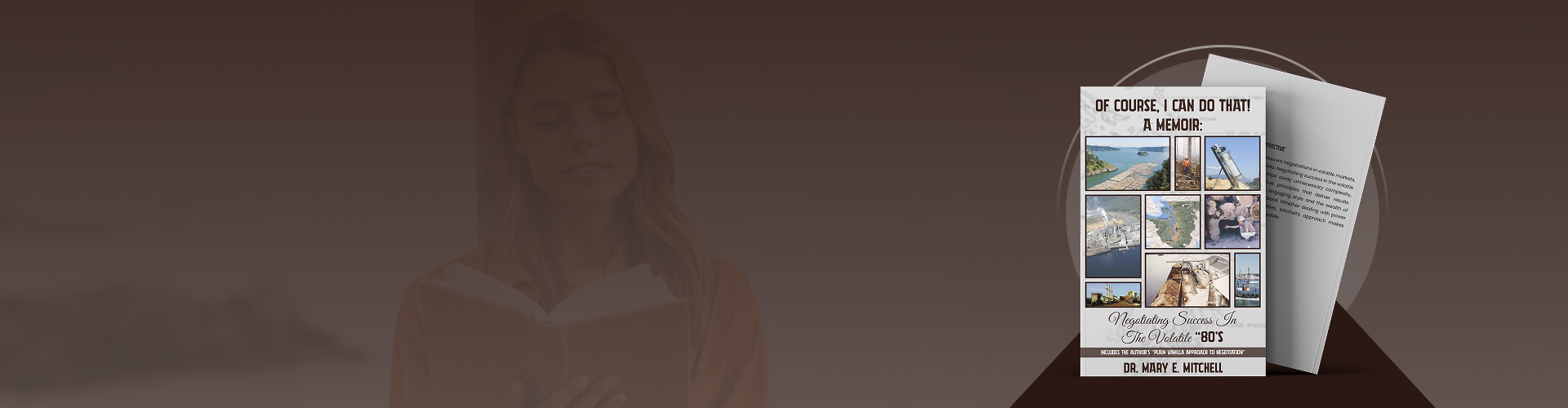

There is a certain kind of book that doesn’t just tell you what happened it makes you feel what it was like to be there. Dr. Mary E. Mitchell’s memoir does exactly that. Rather than offering a polished retrospective, the book is built from letters written in real time during a turbulent decade in American industry. The result is a story that feels immediate, personal, and remarkably honest.
Set between 1978 and 1987, the memoir captures a period when entire industries were being reshaped by economic forces that most people today only know from textbooks. High interest rates, shifting global markets, and prolonged labor strikes form the backdrop, but the heart of the book is how those pressures played out in daily working life.
What makes this account especially compelling is its attention to detail. The reader isn’t given vague descriptions of “corporate challenges.” Instead, the book shows how work actually happened how materials were sourced, how transportation logistics affected production, how negotiations could determine whether a mill stayed open or shut down. These operational realities bring a level of authenticity that is rare in business-related memoirs.
At the same time, the book never becomes dry or overly technical. The letters format keeps the tone grounded and human. There are moments of excitement when things go well, moments of frustration when plans fall apart, and long stretches where uncertainty becomes the norm. That emotional rhythm feels true to life, especially for anyone who has worked in industries affected by market swings or organizational change.
Another quiet strength of the memoir is how it portrays workplace relationships. Managers, suppliers, union members, and coworkers are all part of the story, not as stock characters but as people responding to pressure in different ways. The book doesn’t simplify conflicts or assign easy blame. Instead, it shows how complex and layered industrial environments really are, especially during times of economic stress.
The author’s experience as a woman working in a male-dominated field is woven naturally into the narrative. It is never treated as a headline issue, yet it is always present. Being the only woman in meetings, earning credibility in skeptical environments, and navigating unspoken expectations are all part of the background texture of the story. The understated way these moments are presented makes them more impactful. Readers are left to draw their own conclusions about what it took to succeed in that environment.
One of the most engaging aspects of the book is how the personal and professional blend together. The letters include not only workplace developments but also travel, weather, family connections, and the small disruptions that shape everyday life. These details prevent the memoir from feeling like a pure business narrative. Instead, it becomes a fuller portrait of a life lived alongside a demanding career.
As the years progress, the tone of the book subtly shifts. What begins as a record of career development and industrial problem-solving gradually expands into something broader. There is a growing sense that the story is not only about work, but about how people evolve when they are repeatedly tested by uncertainty. By the time the memoir reaches its later chapters and epilogue, it feels less like a corporate chronicle and more like a reflection on adaptability, purpose, and long-term growth.
This evolution gives the book emotional depth. Readers are not just following a career path; they are watching someone change in response to sustained pressure, responsibility, and opportunity. That makes the memoir relatable even for readers who have never worked in forestry, manufacturing, or large industrial systems.
What ultimately sets this book apart is its lack of polish in the best possible way. The letters are not written to impress. They are written to inform, to process, and to stay connected. That rawness gives the memoir credibility. It feels like a preserved slice of history rather than a carefully curated narrative.
For readers interested in how American industry actually functioned during a critical period, this book offers rare insight. For professionals navigating uncertain career landscapes today, it provides perspective on resilience and adaptation. And for general readers, it delivers a grounded, human story that captures a world that has largely disappeared.
It is a reminder that behind every economic shift and corporate headline are real people, real decisions, and real consequences. This memoir doesn’t just document a decade it brings it back to life.